HIV and Adolescents and Young Adults
HIV Statistics in the United States
According to the Centers for Disease Control and Prevention (CDC):
· Adolescents
(13–19 years) and young adults (20–24 years) accounted for 28,087 people (3%) of all individuals
living with HIV in the United States.
·
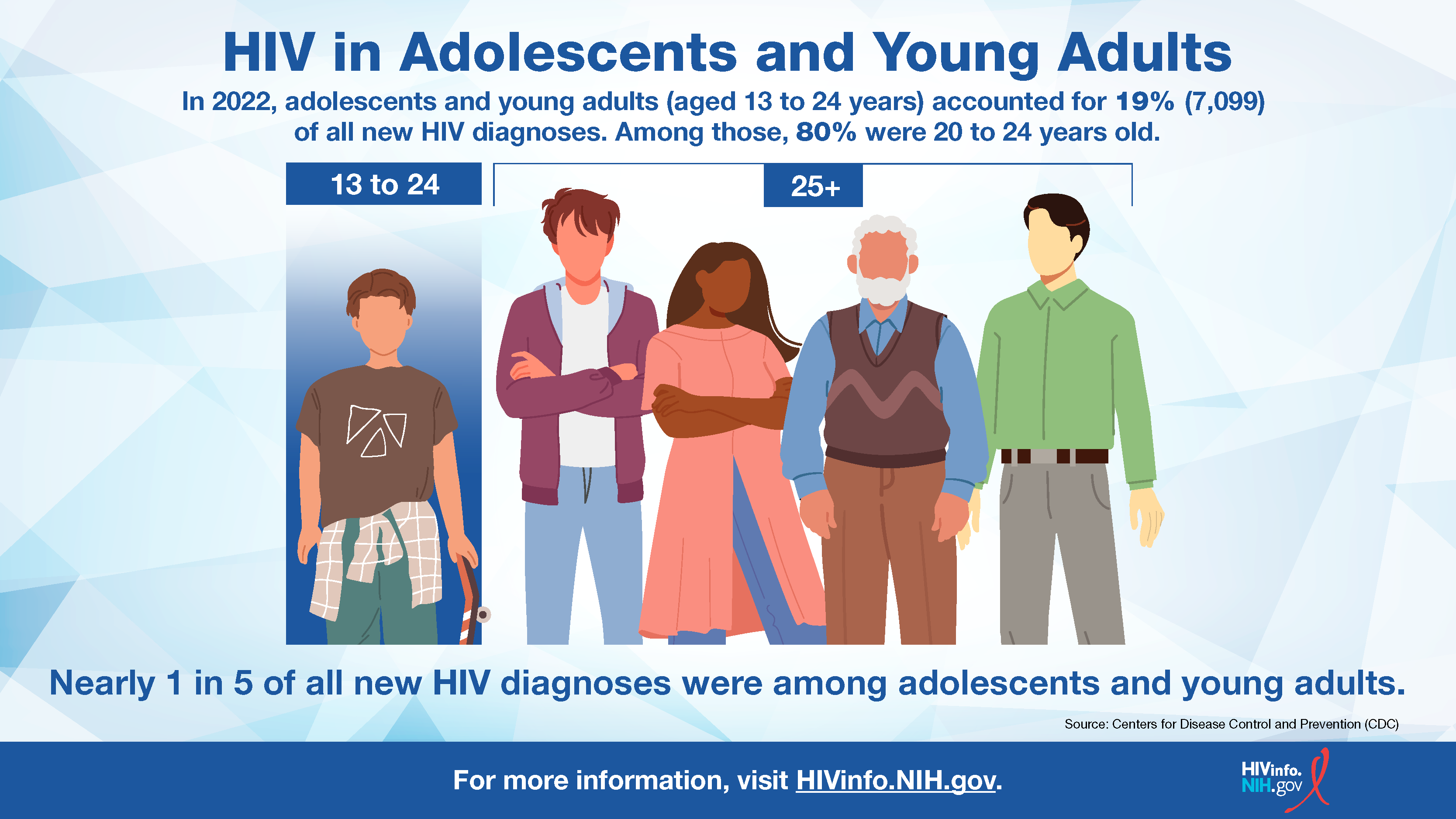
In 2022,
adolescents and young adults represented 7,099
(19%) of the 37,981 new HIV
diagnoses in the U.S. and dependent areas.
·
This means nearly
1 in 5 new HIV diagnoses occurred among individuals aged 13 to 24 years.
How Do Adolescents and Young Adults Get HIV?
·
Some AYA acquired HIV at birth through perinatal transmission.
·
However, most
AYA acquire HIV through sexual transmission.
By gender
and exposure type:
·
Most male
AYA diagnosed with HIV acquired it through male-to-male sexual contact.
·
Most female
AYA diagnosed with HIV acquired it through heterosexual contact.
Factors That Increase HIV Risk in AYA
Several factors contribute to higher HIV risk
among adolescents and young adults:
·
Limited
knowledge about HIV
Understanding prevention, testing, and treatment helps reduce transmission.
·
Low condom
use
Consistent and correct condom use lowers the risk of HIV and other STIs.
·
High rates
of sexually transmitted infections (STIs)
Having an STI increases the risk of acquiring or transmitting HIV.
·
Alcohol or
drug use
Substance use may lead to unsafe sexual behaviors.
·
Injection
drug use
Sharing needles or drug equipment can transmit HIV through blood exposure.
About 44%
of AYA with HIV are unaware of their status, and 34% of diagnosed AYA are not virally suppressed,
creating additional prevention challenges.
How Can PrEP Benefit Adolescents and Young
Adults?
Pre-Exposure
Prophylaxis (PrEP) is a powerful HIV prevention option for adolescents
and young adults at risk.
·
PrEP is used by HIV-negative individuals who are at high risk through
sex or injection drug use.
·
It is not
for people who already have HIV.
·
In 2018,
the FDA approved PrEP for adolescents weighing at least 77 lb (35 kg).
PrEP use
trends:
·
PrEP use among eligible AYA increased from 8% in 2017 to 20% in 2021.
·
However, Black
and Hispanic individuals were less likely to use PrEP compared to
White individuals.
Currently, three HIV medicines are FDA-approved for PrEP.
Can Adolescents Access PrEP?
Yes. PrEP can be accessed through:
·
Pediatricians
·
Local health departments
·
Community health clinics
Cost and
coverage:
·
Most insurance plans cover PrEP.
·
Uninsured individuals may access free or low-cost PrEP through
CDC-supported programs.
Important
considerations:
·
Consent, confidentiality, and legal status vary
by state for individuals under 18.
·
Providers must follow state-specific laws when
prescribing PrEP to minors.
HIV Treatment for Adolescents and Young
Adults
·
Antiretroviral
therapy (ART) is recommended for everyone with HIV, including AYA.
·
ART helps individuals live long, healthy lives
and reduces HIV transmission.
Treatment
considerations for AYA:
·
Medication dosing may depend on body weight, not age.
·
Growth and development affect treatment
planning.
·
Medication
adherence is critical for successful treatment.
Why Is Medication Adherence Challenging for
AYA?
Several factors may make it difficult for
adolescents and young adults to take HIV medicines consistently:
·
HIV-related
stigma and fear of disclosure
·
Busy daily schedules
·
Medication side effects
·
Family challenges (housing instability, illness,
substance use)
·
Lack of health insurance
·
Dependence on caregivers for medications and
appointments
Support, education, and counseling can
significantly improve adherence and outcomes.
This fact sheet is based on information from the following sources:
From CDC:
- Estimated HIV Incidence and Prevalence
- HIV Incidence and Prevalence
- HIV Surveillance Reports
- Preexposure Prophylaxis for Prevention of HIV Acquisition Among Adolescents
From the HIV Clinical Practice Guidelines at Clinicalinfo.HIV.gov:
- Guidelines for the Use of Antiretroviral Agents in Adults and Adolescents With HIV:
- Guidelines for the Use of Antiretroviral Agents in Pediatric HIV Infection:
This fact sheet is based on information from the following sources:
From CDC:
- Estimated HIV Incidence and Prevalence
- HIV Incidence and Prevalence
- HIV Surveillance Reports
- Preexposure Prophylaxis for Prevention of HIV Acquisition Among Adolescents
From the HIV Clinical Practice Guidelines at Clinicalinfo.HIV.gov:
- Guidelines for the Use of Antiretroviral Agents in Adults and Adolescents With HIV:
- Guidelines for the Use of Antiretroviral Agents in Pediatric HIV Infection:
This article and accompanying image are adapted from the NIH HIVinfo fact sheet “HIV and Adolescents and Young Adults” published on HIVinfo.nih.gov, a U.S. government resource providing trusted information about HIV.
Comments (0)
No comments yet. Be the first to comment!
Login to Comment
You must be logged in to leave a comment.