HIV and AIDS: What’s the Difference?
What is HIV?
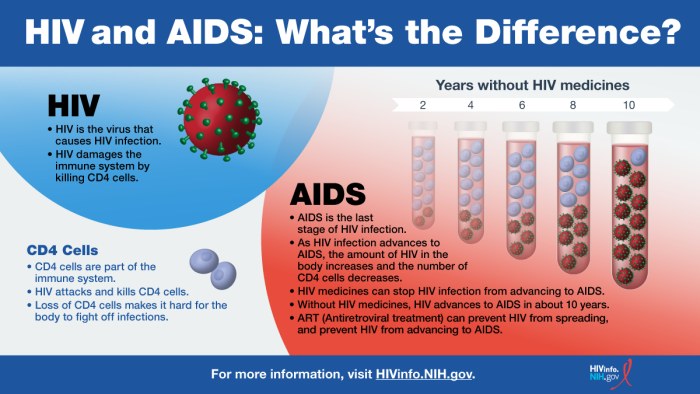
HIV (Human Immunodeficiency Virus) is the virus that causes HIV infection. It attacks the immune system by destroying CD4 cells, which are essential for fighting infections. Over time, as HIV multiplies, the immune system becomes weaker.
Role of CD4 Cells
CD4 cells are a key part of the body’s immune defense. HIV attacks and destroys these cells. As CD4 cell levels drop, the body finds it harder to fight infections and diseases, increasing vulnerability to serious illnesses.
What is AIDS?
AIDS (Acquired Immunodeficiency Syndrome) is the most advanced stage of HIV infection. It develops when HIV has severely damaged the immune system. At this stage:
-
The amount of HIV in the body is high
-
CD4 cell levels are very low
-
The body is unable to fight off infections effectively
Progression from HIV to AIDS
-
Without HIV medicines, HIV can progress to AIDS in about 10 years
-
As years pass without treatment, CD4 cells continue to decline
-
The risk of serious infections increases over time
Can HIV Progression Be Prevented?
Yes. Antiretroviral therapy (ART) can:
-
Control the amount of HIV in the body
-
Protect CD4 cells
-
Prevent HIV from progressing to AIDS
-
Help people with HIV live long, healthy lives
Key Takeaway
-
- HIV is the virus
-
- AIDS is the advanced stage of HIV
-
- Early diagnosis and consistent treatment can stop HIV from becoming AIDS
- Article & Image Credit : hivinfo.nih.gov
Comments (0)
No comments yet. Be the first to comment!
Login to Comment
You must be logged in to leave a comment.