HIV and Opportunistic Infections, Coinfections, and Conditions
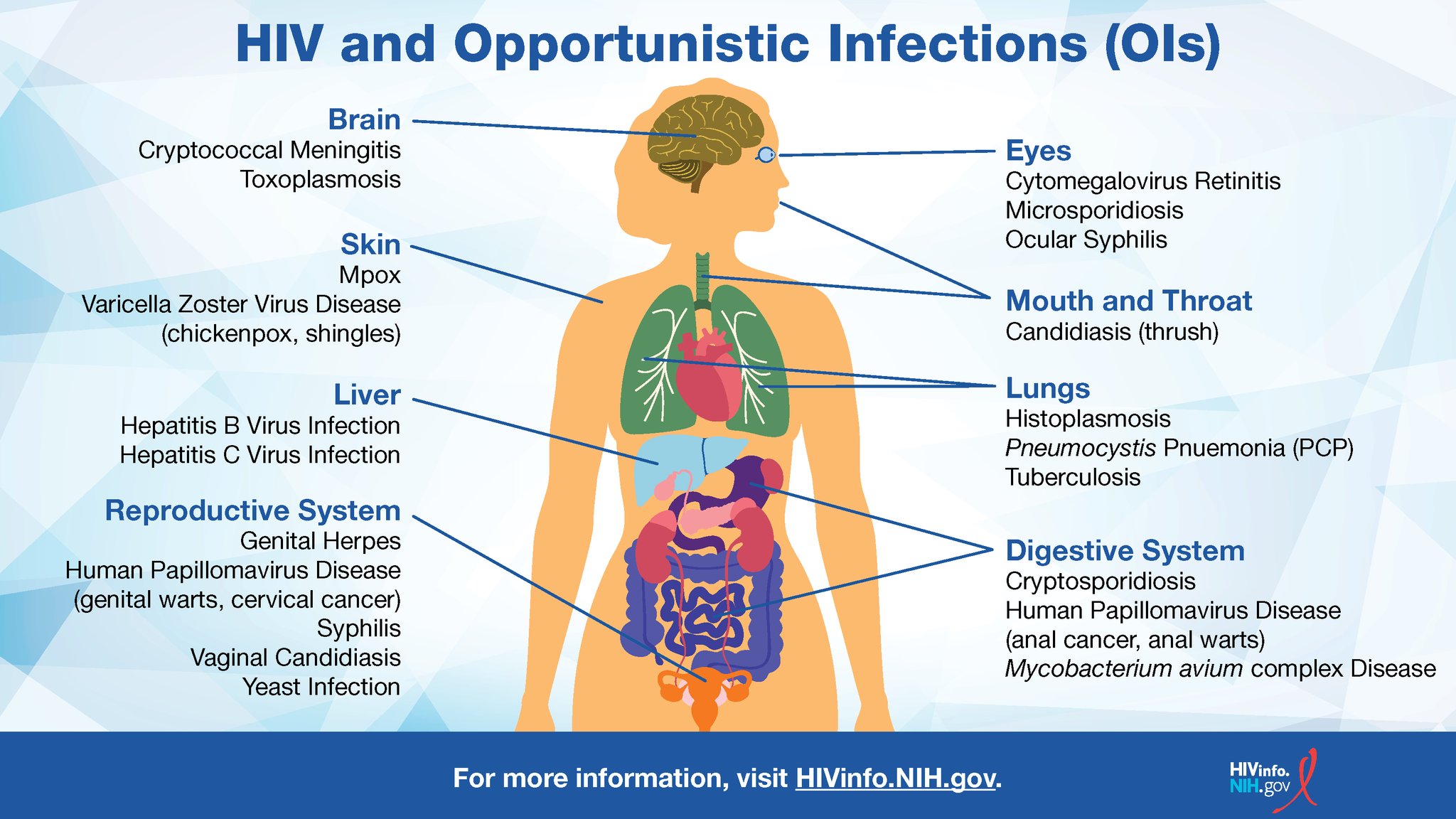
What Are Opportunistic Infections?
Key Takeaways
- Opportunistic infections (OIs) are illnesses that occur more often—or are more severe—when the immune system is weakened, including in people living with HIV.
- Taking HIV treatment exactly as prescribed protects the immune system and is the most effective way to prevent OIs.
Understanding Opportunistic Infections (OIs)
Opportunistic infections are caused by germs such as viruses, bacteria, fungi, and parasites that take advantage of a weakened immune system. People at higher risk include those living with HIV, undergoing cancer treatment, or who have received organ transplants.
These germs can spread through:
- Air
- Body fluids
- Contaminated food or water
Examples of opportunistic infections that may affect people with HIV include:
- Candidiasis (yeast infections)
- Salmonella infections
- Toxoplasmosis
- Tuberculosis (TB)
In some cases, infections that were previously inactive—such as latent tuberculosis—can become active again as the immune system weakens due to untreated or uncontrolled HIV.
Why Do Opportunistic Infections Occur in People With HIV?
HIV attacks the immune system by destroying CD4 cells, which are essential for fighting infections. As HIV multiplies, the immune system becomes less able to defend the body, allowing opportunistic infections to develop.
Without treatment, HIV can progress to AIDS (Acquired Immunodeficiency Syndrome). Certain infections and cancers—such as specific types of pneumonia and TB— are considered AIDS-defining conditions and can be life-threatening.
The good news: effective HIV treatment prevents immune damage and greatly reduces the risk of opportunistic infections.
Are Opportunistic Infections Still a Concern?
Thanks to modern HIV medicines, opportunistic infections are much less common today. However, they can still occur when:
- A person does not yet know they have HIV
- HIV has been diagnosed but treatment has not started
- HIV treatment is not effectively controlling the virus
For people living with HIV, the strongest protection against opportunistic infections includes:
- Taking HIV medications exactly as prescribed
- Attending regular medical follow-up appointments
How to Lower the Risk of Opportunistic Infections
Avoid Exposure to Infection-Causing Germs
- Use condoms consistently to prevent sexually transmitted infections (STIs)
- Do not share needles or injection equipment
- Wash hands thoroughly after contact with human or animal feces
- Speak with your healthcare provider about additional prevention strategies
Practice Food and Water Safety
Some opportunistic infection-causing germs can be spread through contaminated food or water. To reduce risk:
- Avoid undercooked eggs and meats
- Avoid unpasteurized dairy products and juices
- Avoid raw seed sprouts
- Do not drink untreated water from lakes or rivers
Take Precautions When Traveling
Before traveling, consult your healthcare provider about your destination. You may need:
- Recommended vaccines
- Preventive medications for region-specific infections
For example, people living with HIV traveling to areas with high rates of malaria may be advised to take preventive antimalarial medication.
Stay Up to Date on Vaccinations
Vaccinations play an important role in preventing serious infections. Your healthcare provider can help determine which vaccines are appropriate based on your health and immune status.
Treatment Options for Opportunistic Infections
Many opportunistic infections can be treated using:
- Antibiotics
- Antiviral medications
- Antifungal drugs
- Antiparasitic treatments
Treatment depends on the type of infection and individual health conditions. Healthcare providers also consider possible drug interactions between HIV medicines and opportunistic infection treatments.
After successful treatment, some people may need ongoing medication to prevent the infection from returning. Treatments are most effective when HIV is well controlled.
Sources and Further Reading
Primary Credit:
Content adapted and informed by
HIVinfo.nih.gov, a service of the U.S. Department of Health and Human Services.
Additional Trusted Resources:
-
Centers for Disease Control and Prevention (CDC)
https://www.cdc.gov/hiv -
Clinicalinfo.HIV.gov – HIV Clinical Guidelines
https://clinicalinfo.hiv.gov -
MedlinePlus – HIV and Infections
https://medlineplus.gov/hivandinfections.html -
World Health Organization (WHO) – HIV/AIDS
https://www.who.int/health-topics/hiv-aids
Comments (0)
No comments yet. Be the first to comment!
Login to Comment
You must be logged in to leave a comment.