Hepatitis B: Understanding, Prevention, and Care
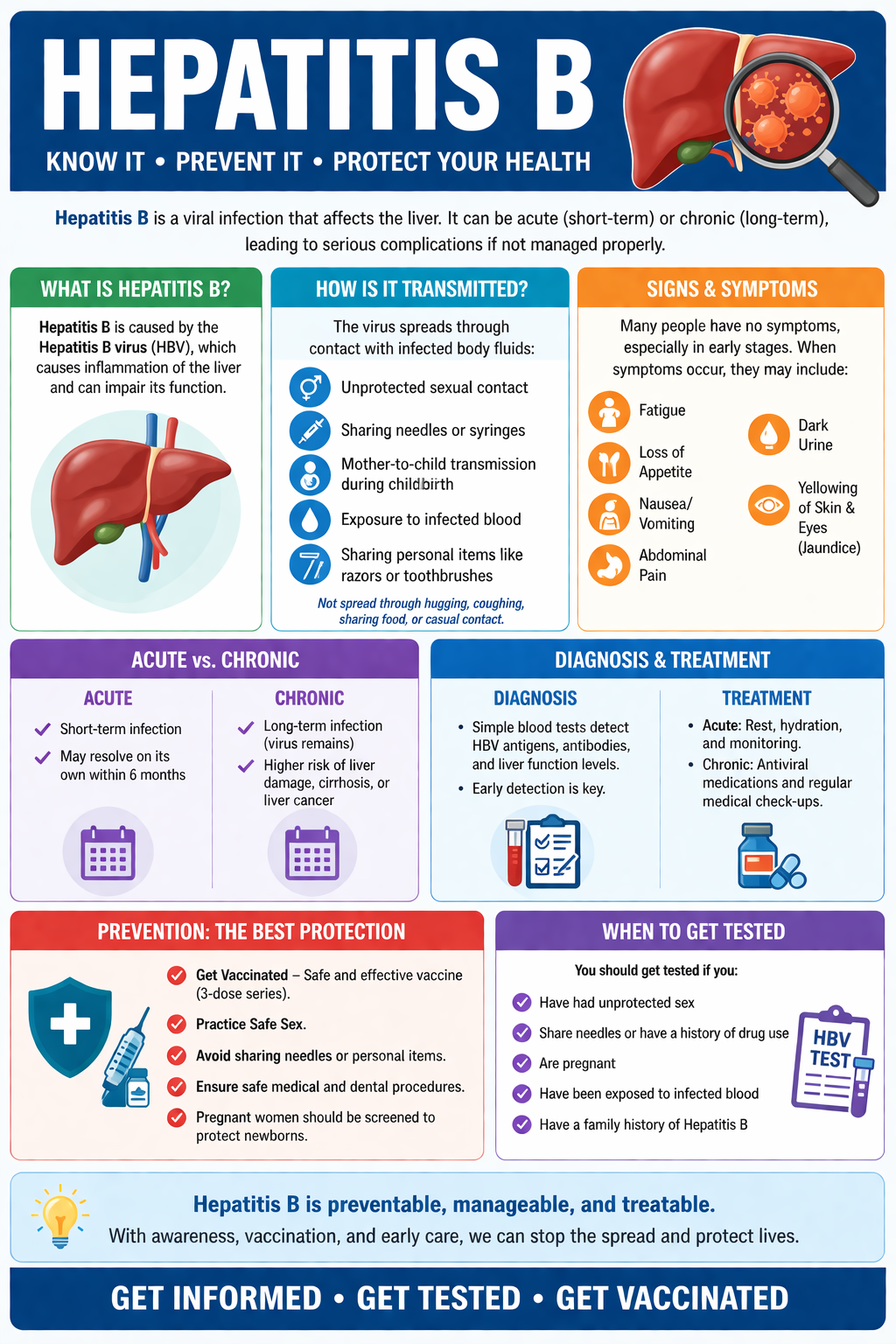
Hepatitis
B is a
serious liver infection caused by the Hepatitis B virus (HBV). It can range
from a short-term (acute) illness to a long-term (chronic) condition that may
lead to severe complications such as liver damage, cirrhosis, or liver cancer
if not properly managed.
What is Hepatitis B?
Hepatitis
B is a viral infection that affects the liver, causing inflammation and
impairing its ability to function. While some people recover completely, others
develop chronic infections that can last a lifetime.
How is Hepatitis B Transmitted?
The virus
spreads through contact with infected body fluids. Common modes of transmission
include:
- Unprotected sexual contact with an infected person
- Sharing needles or syringes, especially in drug use
- Mother-to-child transmission during childbirth
- Exposure to infected blood, such as through unsafe
medical practices or transfusions
- Sharing personal items like razors or toothbrushes
that may have blood traces
Hepatitis
B is not spread through casual contact like hugging, coughing, or
sharing food.
Signs and Symptoms
Many
people with Hepatitis B may not show symptoms, especially in the early stages.
When symptoms do occur, they may include:
- Fatigue and weakness
- Loss of appetite
- Nausea and vomiting
- Abdominal pain
- Dark urine
- Yellowing of the skin and
eyes (jaundice)
Chronic
Hepatitis B may remain silent for years before causing serious liver damage.
Acute vs. Chronic Hepatitis B
- Acute Hepatitis B: A short-term infection
that may resolve on its own within 6 months.
- Chronic Hepatitis B: A long-term condition
where the virus remains in the body, increasing the risk of liver disease
and complications.
Infants
and young children are more likely to develop chronic infections than adults.
Diagnosis and Testing
Hepatitis
B is diagnosed through simple blood tests that detect:
- HBV antigens and antibodies
- Liver function levels
Early
detection is key to preventing complications and managing the disease
effectively.
Treatment Options
- Acute Hepatitis B: Usually requires
supportive care such as rest, hydration, and monitoring.
- Chronic Hepatitis B: May be managed with
antiviral medications to reduce viral load and prevent liver damage.
Regular monitoring by healthcare providers is essential.
Prevention: The Best Protection
The most
effective way to prevent Hepatitis B is through vaccination. The
Hepatitis B vaccine is safe, effective, and typically given in a series of
shots.
Additional
preventive measures include:
- Practicing safe sex
- Avoiding sharing needles or
personal items
- Ensuring safe medical and
dental procedures
- Screening pregnant women to
prevent transmission to newborns
Why Awareness Matters
Millions
of people worldwide are living with Hepatitis B, often without knowing it.
Increasing awareness, encouraging testing, and promoting vaccination can
significantly reduce the spread of the virus and save lives.
When to
Get Tested
You
should consider getting tested if you:
- Have had unprotected sex
- Share needles or have a
history of injection drug use
- Are pregnant
- Have been exposed to
infected blood
- Have a family history of Hepatitis
B
Conclusion
Hepatitis
B is a preventable and manageable condition. With proper vaccination, early
diagnosis, and appropriate care, individuals can lead healthy lives while
reducing the risk of serious liver complications. Awareness and proactive
healthcare are the keys to combating this global health concern.
Comments (0)
No comments yet. Be the first to comment!
Login to Comment
You must be logged in to leave a comment.